
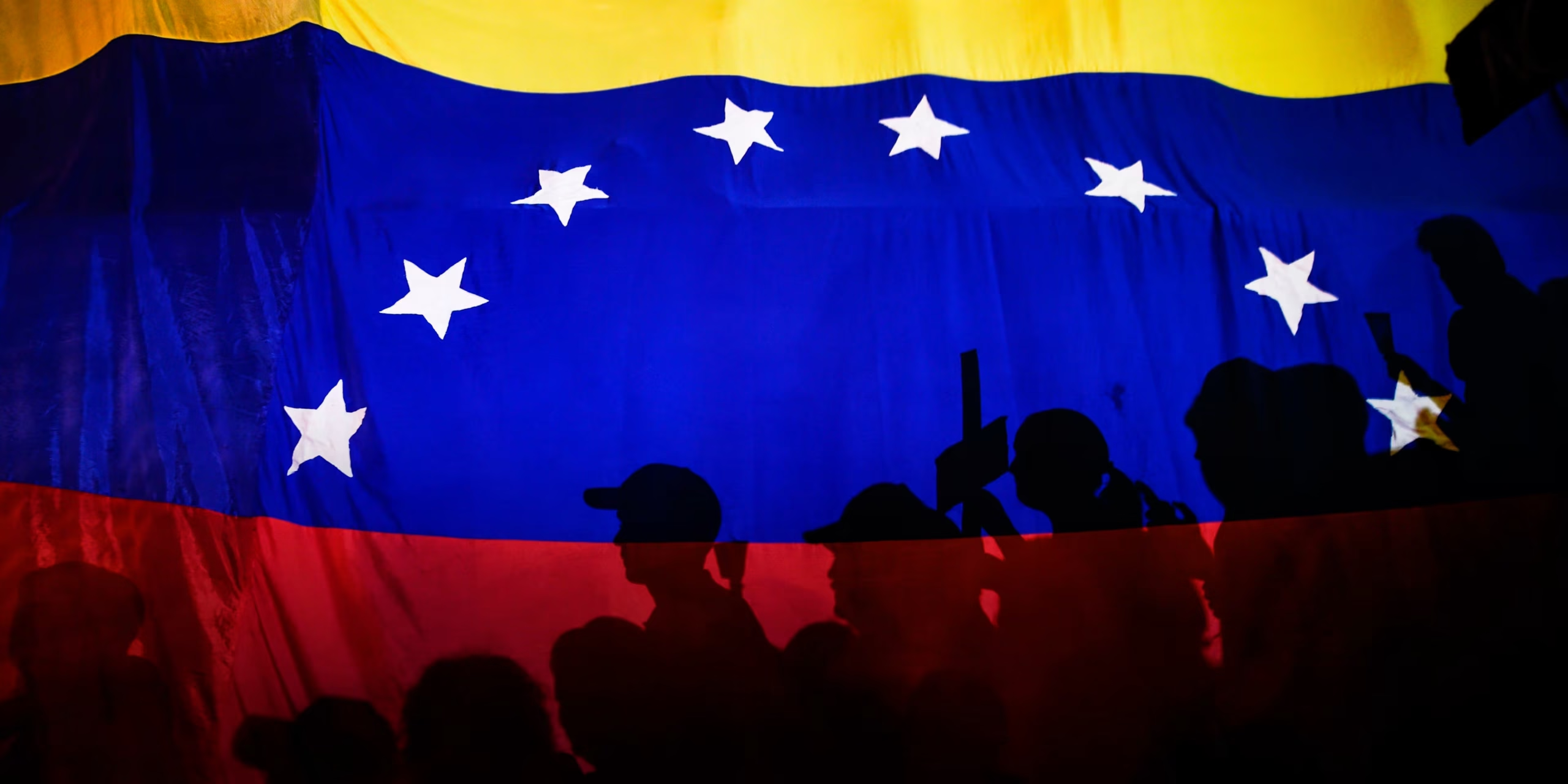
Venezuela conflict history: A Simple Look at the Roots of Conflict
Venezuela conflict history is the result of many years of political decisions, economic dependence, and social division. The conflict did not appear suddenly. Instead, it slowly developed as problems were ignored or poorly managed. By looking at the past, we can better understand how Venezuela reached a point of deep national struggle.
Venezuela Conflict History and Early Political Background
To understand Venezuela conflict history, we must begin with its political background. During the early and mid-20th century, Venezuela experienced military rule and strong central power. Although these governments brought some stability, they also limited political freedom and public participation.
In the late 1950s, Venezuela moved toward democracy. Elections were introduced, and civilian governments replaced military leaders. For a time, this system worked. Oil income helped fund schools, hospitals, and public projects. However, power was shared mainly between a small number of political parties. Many citizens felt excluded from real influence.
Oil Dependency in Venezuela Conflict History
Oil is one of the most important factors in Venezuela conflict history. The country has some of the largest oil reserves in the world. For decades, oil exports provided most of the government’s income. This allowed leaders to spend money without building other parts of the economy.
Because of this dependence, Venezuela did not develop strong agriculture or manufacturing industries. When oil prices dropped, government income fell sharply. This caused budget problems, debt, and reduced public services. Ordinary people felt the impact through rising prices and fewer job opportunities.
Oil wealth also created corruption. Large sums of money were controlled by a small group of officials. Over time, public trust in leadership weakened.
Social Inequality and Public Anger
Social inequality is another major part of Venezuela conflict history. Even when oil money flowed, it was not shared equally. Wealth was concentrated in cities and among political elites. Many people in rural areas and poor neighborhoods lacked basic services.
This inequality created anger and disappointment. People felt that the political system served only a few. These feelings grew stronger during economic downturns. When living conditions worsened, public frustration turned into political action.
New political movements promised change, fairness, and national pride. Many citizens supported these ideas because they felt ignored for too long.
Government Control and Economic Problems
As Venezuela conflict history continued, the government increased control over key industries. Oil, electricity, food distribution, and media were placed under state control. Supporters believed this would protect national resources and help the poor.
However, poor management and lack of investment caused production to fall. Businesses struggled to operate, and shortages became common. Food, medicine, and basic supplies were often hard to find. Inflation reduced the value of wages and savings.
These economic problems affected daily life. Families had to spend more time searching for basic goods. Stress and uncertainty became part of everyday experience.

Political Division in Venezuela Conflict History
Political division is central to Venezuela conflict history. Society became deeply divided between supporters of the government and those who opposed it. Public debate grew emotional and hostile. Trust between different groups disappeared.
Elections and courts were often questioned. Each side accused the other of unfair behavior. Because of this, compromise became difficult. Instead of working together, political groups focused on winning power.
This division affected families and friendships. People avoided political discussions to prevent conflict. Fear and tension shaped public life.
Loss of Trust in Institutions
One of the most damaging aspects of Venezuela conflict history was the loss of trust in institutions. Courts, elections, and law enforcement were often seen as unfair or ineffective. When people stop trusting institutions, they stop believing that problems can be solved peacefully.
This lack of trust pushed people toward extreme positions. Dialogue became rare, and confrontation became common. Without trust, rebuilding unity became very difficult.
Protests and Public Response
Protests are an important chapter in Venezuela conflict history. As economic conditions worsened, citizens organized demonstrations to express frustration. Some protests focused on living conditions, while others demanded political reform.
Although many protests were peaceful, clashes sometimes occurred. These events increased fear and insecurity. For many people, daily routines were disrupted, and confidence in the future declined.
Public unrest showed how deeply the crisis affected society. It was no longer only a political issue but a social one.
International Influence in Venezuela Conflict History
Foreign involvement also played a role in Venezuela conflict history. Different countries supported different political sides based on ideology and economic interests. Some offered financial assistance, while others applied pressure through diplomatic actions.
While international attention brought global awareness, it also increased complexity. For ordinary citizens, outside involvement often felt disconnected from daily struggles.
Why Venezuela Conflict History Still Matters
Studying Venezuela conflict history helps us understand how nations can slowly fall into crisis. It reminds us that conflict is rarely caused by a single event. Instead, it grows when warning signs are ignored.
Understanding the past helps future generations learn from mistakes. It encourages peaceful solutions and respect for different voices. History, when studied carefully, becomes a guide rather than a burden.
Lessons from Venezuela Conflict History
Venezuela conflict history teaches important lessons. Economic dependence on one resource creates risk. Political systems that exclude people create anger. Ignoring inequality leads to division.
The past shows that strong institutions, fair economic planning, and open dialogue are necessary for stability. Long-term problems require long-term solutions based on cooperation and trust.
Internal Links
External DoFollow Links
- https://www.britannica.com/place/Venezuela
- https://www.cfr.org/americas/venezuela
- https://www.history.com/topics/south-america/venezuela