



Indian electronics exports on fire
Indian electronics export on fire – India’s electronics export surge explained
The term Indian electronics exports on fire quite literally captures what is happening in the country’s high-tech manufacturing and export ecosystem. Over the last few years, India has shifted from being primarily a services-economy powerhouse into a serious contender in global electronics manufacturing and exports.
A snapshot of the boom
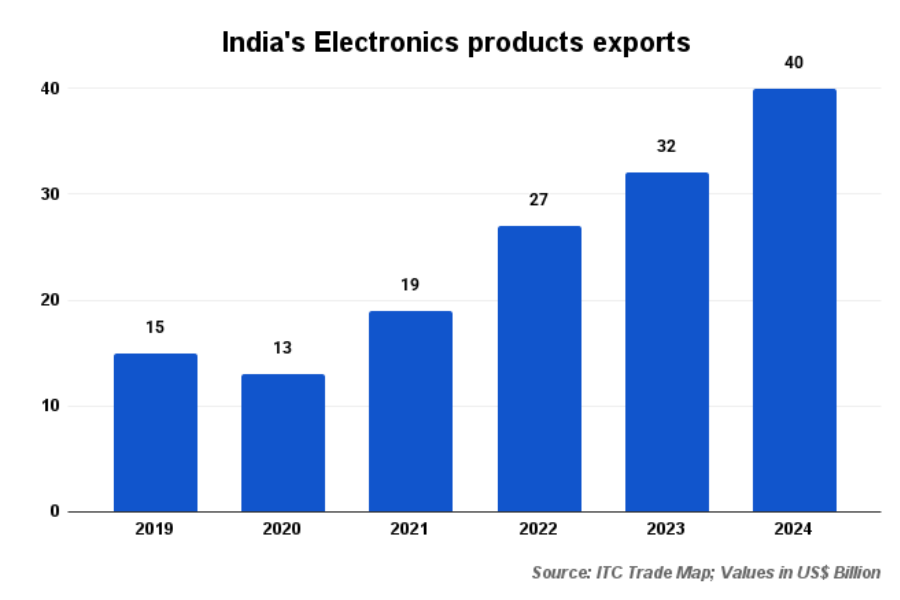
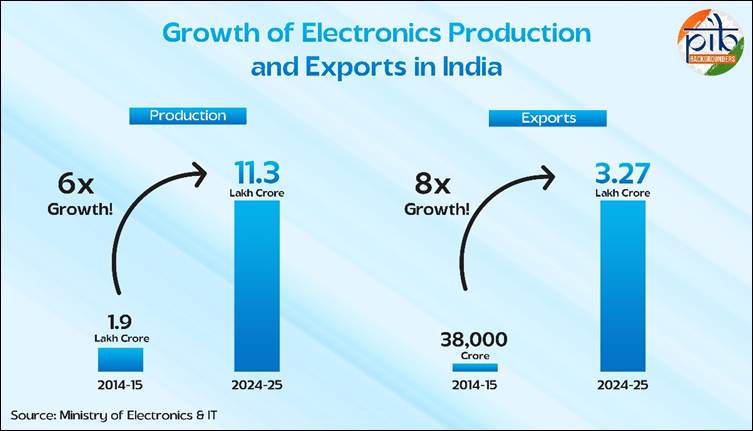
- In FY 2024-25, India’s electronics exports reached around US$ 38.57 billion, marking a year-on-year growth of 32.47%. The Economic Times+2indiabusinesstrade.in+2
- The first quarter of FY 2026 (April–June) alone saw exports grow 47 % year-on-year to about US$ 12.4 billion. icea.org.in+2CargoNet+2
- Historically, electronics made up about 6.73 % of India’s total merchandise exports; now that share is up to around 9 %. The Economic Times+1
So yes — Indian electronics export is on fire. But what’s behind this rapid acceleration? Let’s dig into the drivers, the challenges, and what this means for the future.
What’s driving the surge?
1. Smartphones + Global Supply Chain Shift
A big part of the story is mobile phones. India has become a major hub for smartphone manufacturing and export, helped by global companies diversifying their supply chains away from China. The Economic Times+2India Brand Equity Foundation+2
As one article puts it: “mobile phone exports reached US$ 10.5 billion during April–December 2023, comprising ~52 % of total electronics exports.” The Economic Times
2. Policy & Manufacturing Push
Government initiatives such as the Production Linked Incentive Scheme (PLI) for electronics, the Scheme for Promotion of Manufacturing of Electronic Components and Semiconductors (SPECS), and the Electronics Manufacturing Clusters (EMC 2.0) scheme have offered incentives, subsidies and manufacturing-cluster support. The Economic Times
According to the Ministry of Commerce, export values and manufacturing values have been rising in tandem. Mcommerce+1
3. Diversification of Export Products
While smartphones lead, non-smartphone electronics are gaining. For example, photovoltaic cells, telecom equipment, chargers/adapters, digital processing units, and medical electronics are also growing strongly. The Economic Times+1
This diversifies the risk and increases value-added content, rather than just assembly.
4. Global demand, favourable export markets
India is benefitting from global demand for electronics, as well as strategic shifts (e.g., “China +1” manufacturing strategies). It’s being seen as an alternative manufacturing hub. CargoNet+1
The regional, state-wise dimension
Different Indian states are benefiting differently. According to one report: Tamil Nadu exported US$ 14.65 billion worth of electronics in FY25, Karnataka US$ 7.8 billion, Uttar Pradesh US$ 5.26 billion, Maharashtra US$ 3.5 billion and Gujarat US$ 1.85 billion. The Economic Times+1
This reflects how manufacturing hubs (with infrastructure, skilled labour, investor interest) are rising in particular states.
Why this matters
- For India’s economy: Electronics exports increasing means higher foreign earnings, more manufacturing jobs, better value addition (rather than simply import and assembly).
- For India’s positioning globally: India is moving up from being seen as primarily a services-outsourcing country to being a credible manufacturing & export hub in technology.
- For global supply chains: Multinationals looking to diversify manufacturing bases away from heavy dependence on one country (e.g., China) are finding India attractive.
- For tech value chain deepening: The move from “just final assembly” to component-making, sub-assemblies, testing, etc., improves resilience and domestic value addition.
Challenges still ahead
- Component ecosystem gap: India still imports many high-end components (PCBs, chips, modules) and needs to build deeper value chains. Reports suggest that manufacturing of components must ramp up. nitiforstates.gov.in+1
- Competitive global environment: Many countries are vying for export-manufacturing investment, and India must continuously improve infrastructure, ease of doing business, logistics, and workforce skills.
- Scale and value addition: Exporting large volumes is one thing; exporting high value-added products with strong margins is another. The goal is not just quantity, but quality and competitiveness.
- Tariff/Trade risks & geopolitics: Global trade disruptions, tariff wars, supply-chain shocks can impact export flows. For example, one article pointed to shifting smartphone exports ahead of tariffs. Wall Street Journal
What next? The road ahead
- The sector is targeting US$ 100 billion electronics exports by 2026/27. The Economic Times+1
- Growth in non-smartphone electronics is expected to accelerate (solar modules, telecom equipment, medical electronics) and thereby broaden the export base.
- States will vie to become manufacturing hubs – infrastructure investments, special economic zones, port/logistics upgrades will be critical.
- Policy-makers will likely focus on deeper value chain: attract component manufacturers, design centres, R&D, testing labs so India isn’t just finishing point but full value chain node.
In summary
From the vantage point of 2025, it is fair to say that Indian electronics export is on fire. The rapid growth reflects multiple aligned factors: global demand, manufacturing policy push, company investments, regional hubs, and diversification of products.
However, sizzle alone is not enough — to sustain and escalate this boom, India must build up its underlying manufacturing base, increase value addition, and navigate global trade headwinds. If it succeeds, the result could be a transformation of India’s role in global electronics manufacturing — from follower to leader.
Call to action for readers:
If you’re a business leader, investor, or policy-maker, tracking India’s electronics export boom presents both opportunities and lessons. Whether it’s component manufacturing, export partnerships, supply-chain diversification or states developing industrial ecosystems: the time to act is now.