

Ex-CIA Officer Richard Barlow’s Explosive Claim: US Ignored Pakistan’s Nuclear Build-Up, India-Israel Strike Plan Revealed
In a series of astonishing disclosures, former CIA intelligence officer Richard Barlow has accused the United States of intentionally ignoring Pakistan’s nuclear capabilities program in the 1980s. According to Barlow, despite there being solid intelligence about Islamabad’s covert nuclear program, Washington ignored the intelligence and multiple warnings because of Cold War politics and strategic objectives in South Asia.
Ex-CIA officer Richard Barlow, who has served in the CIA, the Arms Control and Disarmament Agency, and the US Department of Defense, has said that the US government prioritized its ties with Pakistan— to oppose Soviet influence in Afghanistan— over supporting non-proliferation. Barlow, when speaking to ANI, said, “We had quite a bit of intelligence about Pakistan’s nuclear program… But nobody was taking action in our government.”
Nuclear Warnings
Ex-CIA officer Richard Barlow pointed out that the Reagan administration’s strategy let Pakistan keep building nuclear weapons. He referred to a 1980 memo by US National Security Adviser Zbigniew Brzezinski, which said that concerns about stopping the spread of nuclear weapons should not shape foreign policy.
Barlow argues that this policy gave Pakistan freedom to develop nuclear weapons while it received billions of dollars in US aid for the Afghan war. “It wasn’t an intelligence failure; it was a policy failure,” Barlow said, noting that the CIA’s internal reports on the issue were often ignored.
One major example he mentioned was the 1987 Arshad Pervez case, in which a Pakistani agent tried to buy maraging steel, a critical material for uranium enrichment. Barlow claims the operation was compromised after senior US officials reportedly warned Pakistani authorities, allowing the agent to avoid serious consequences.

“Muslim Bomb” – A Dangerous Narrative
Perhaps the most explosive part of Barlow’s revelation is his reference to the “Muslim Bomb” concept. He alleges that Pakistan’s nuclear ambitions extended beyond countering India and were meant to create a shared nuclear capability for Muslim nations.
Ex-CIA officer Richard Barlow claims Pakistani scientist Abdul Qadeer Khan openly justified this by saying, “We have the Christian bomb, the Jewish bomb, and the Hindu bomb—so we need the Muslim bomb.”
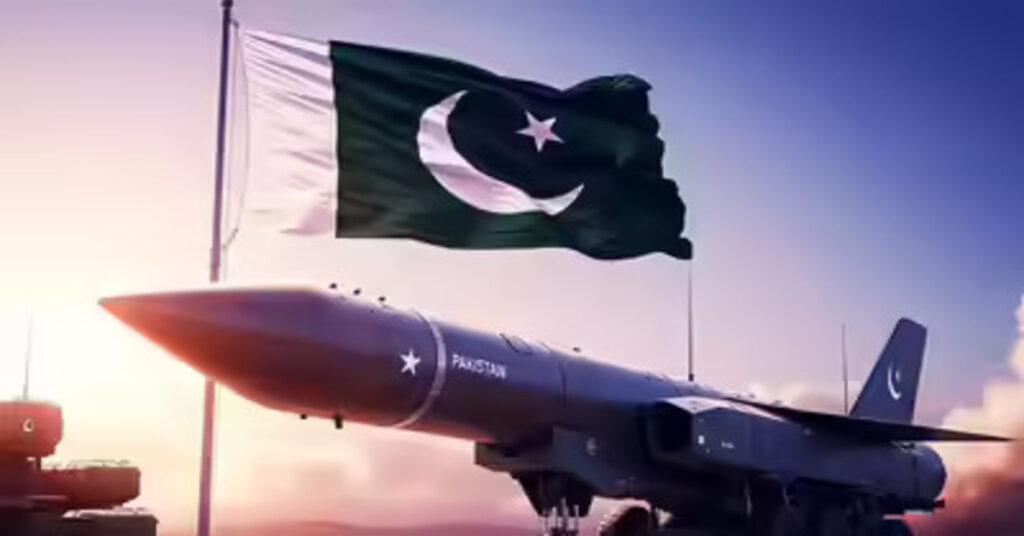
According to the former CIA officer, intelligence reports even indicated that Pakistan mounted nuclear weapons on its F-16 fighter jets, but the US government chose to stay silent due to geopolitical dependencies.
Secret India-Israel Plan to Strike Kahuta Nuclear Site
Adding another dramatic layer to his claims, Richard Barlow confirmed reports about a covert India-Israel plan in the early 1980s to destroy Pakistan’s Kahuta nuclear enrichment facility.
According to him, Israel had agreed to provide operational support to India for a joint airstrike. However, the mission was reportedly called off when then-Prime Minister Indira Gandhi refused to authorize the attack.
Ex-CIA officer Richard Barlow said, “It’s a shame that Indira didn’t approve it. It would’ve solved a lot of problems.” The revelation adds new context to historical Indo-Israeli cooperation and the regional nuclear balance that followed.
Global Impact
Ex-CIA Officer Richard Barlow’s info has stirred up a fresh discussion on how big countries, especially the US, put quick gains ahead of keeping things safe in the long run. His story suggests they kind of ignored important intel because of Cold War stuff.
People think this could mean folks will look closely at the US and Pakistan’s history and past mistakes about stopping the spread of nuclear weapons. For India, it backs up what they’ve always thought about other countries letting Pakistan build up its nuclear stuff.
Pakistan still has nukes, and people all over the world are still worried about how safe those weapons are.
Barlow’s disclosures reignite debate on how the US ignored Pakistan’s nuclear ambitions during the Cold War. Experts believe his claims expose deep flaws in American foreign policy and intelligence oversight. As tensions rise in South Asia, the former CIA officer’s revelations underline the long-term consequences of political compromises on nuclear security.
You may also Visit : Indian Air Force Myanmar rescue