
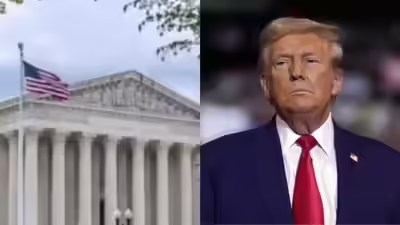

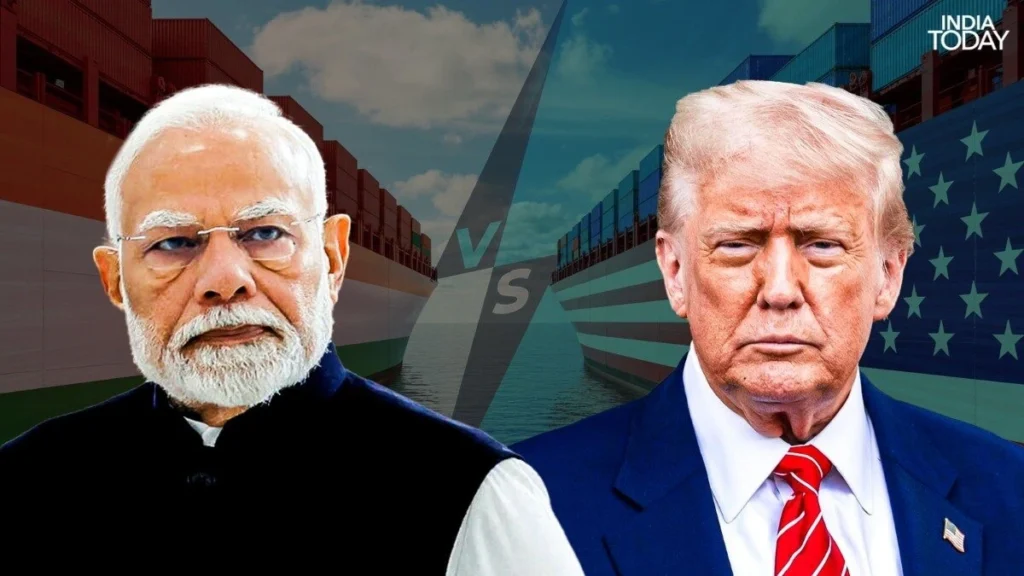
The topic of Trump tariffs on India has become a major talking point in global trade news. When the United States imposed heavy tariffs on Indian goods, India responded with strategic patience, showing that sometimes the best response is to do nothing while legal and diplomatic channels take their course.
Background of Trump Tariffs on India
In 2025, the Trump administration implemented tariffs targeting Indian exports, citing trade imbalances and security concerns. The Trump tariffs on India affected key sectors including textiles, pharmaceuticals, and engineering goods, raising concerns among exporters.
India’s Initial Response to Trump Tariffs on India
Rather than escalating trade tensions through retaliation, India focused on diplomacy and monitoring legal developments in the United States. Experts suggest that India’s measured approach positions the country for long-term gains.
Legal Challenge and the Supreme Court
The Trump tariffs on India faced legal challenges in the U.S., questioning whether the President had the authority to impose unilateral tariffs under the International Emergency Economic Powers Act (IEEPA). Courts have hinted that many of these tariffs may be illegal, and the case now awaits a Supreme Court decision.
Why India Could Do Nothing and Still Win
- Legal momentum: The courts are questioning the validity of the tariffs.
- Strategic patience: India avoided counter-tariffs, instead relying on diplomacy.
- Global trade precedent: A favorable ruling could protect India and other countries from unilateral tariffs.
- Economic preparedness: Indian exporters have adapted to the temporary trade barriers.
Impact of Trump Tariffs on India’s Export Sectors
The Trump tariffs on India impacted industries like textiles, pharmaceuticals, and automotive components. If lifted by the Supreme Court, exporters could regain market competitiveness and restore lost revenues. India’s cautious approach ensures minimal disruption in long-term trade relationships.
Future U.S.-India Trade Relations and Trump Tariffs on India
While legal relief is likely, India must also manage broader trade relations with the United States. Future agreements should ensure fairness, reciprocity, and protection of strategic interests, including energy and technology cooperation.
Steps India Can Take Regarding Trump Tariffs on India
- File amicus briefs to protect India’s interests in U.S. courts.
- Diversify export markets to reduce dependence on U.S. trade.
- Strengthen negotiating positions for future trade agreements.
Conclusion
The saga of Trump tariffs on India illustrates how legal challenges and strategic diplomacy can sometimes achieve better results than aggressive retaliation. With the Supreme Court review underway, India demonstrates that careful strategy can lead to victory without direct confrontation.
External Resources
- Politico – Trump imposes 25% tariff on India
- Reuters – India prioritizes national interest in trade talks
- India Today – Trump tariffs case reaches Supreme Court