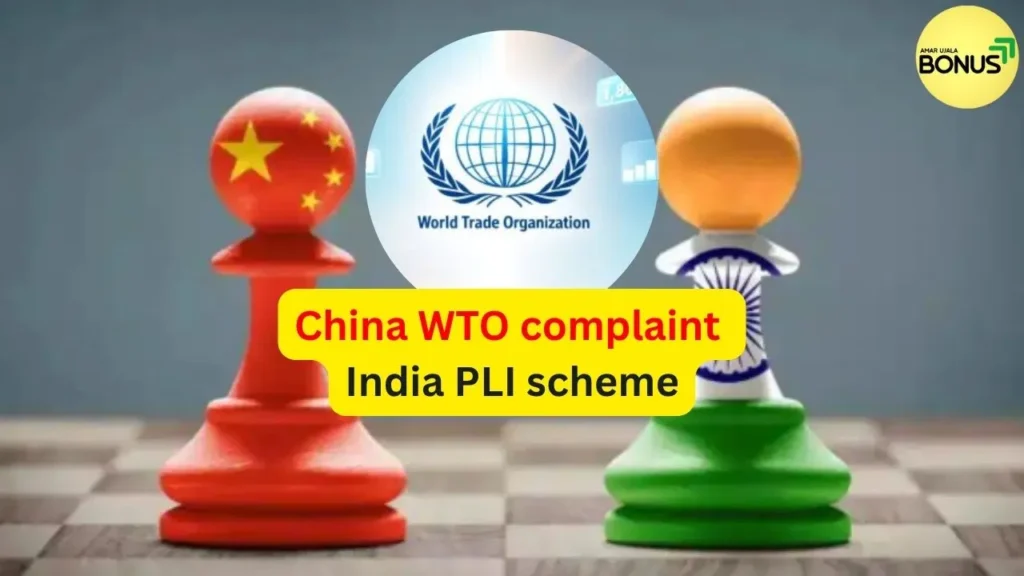
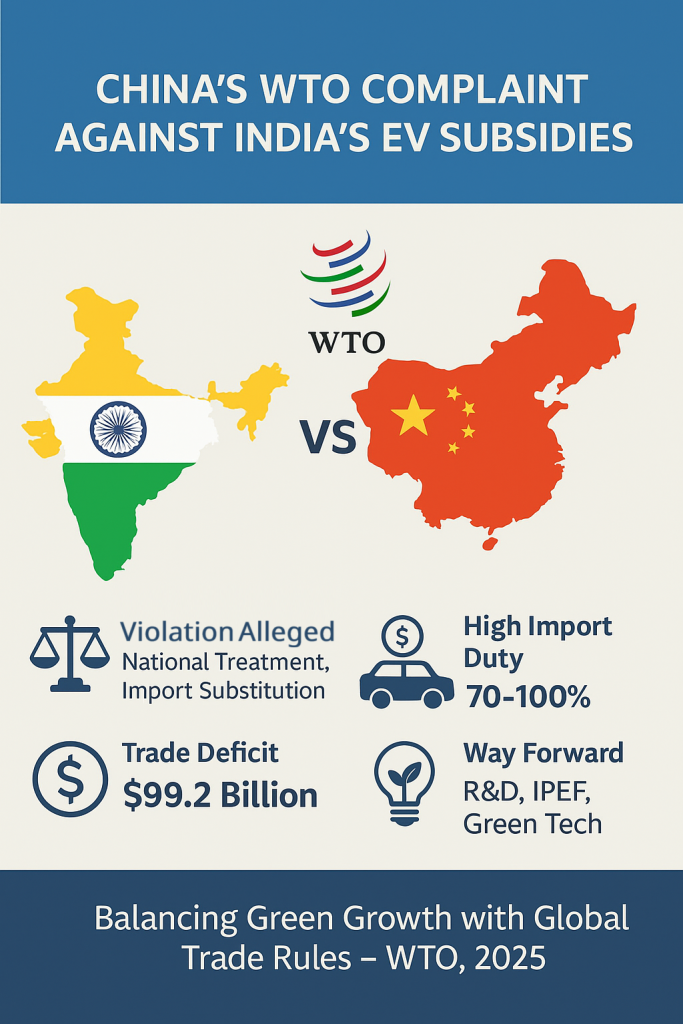
The global trade community is buzzing after reports emerged that China Trying to Block India’s PLI Scheme at WTO — a move that could have massive consequences for both nations. On the surface, it looks like a simple trade dispute. But dig deeper, and it reveals an intense battle over manufacturing dominance, national self-reliance, and the future of electric mobility.
Let’s uncover five reasons why this decision might actually backfire on Beijing — and how India could emerge even stronger from the controversy.
1. China’s WTO Complaint Highlights India’s Growing Power
By taking India to the World Trade Organization, China inadvertently acknowledges India’s rising influence in global manufacturing. The Production Linked Incentive (PLI) scheme is working — multinational companies are shifting production to India, especially in EV batteries, electronics, and semiconductors.
Instead of slowing India down, this dispute has put global focus on the success of its industrial policy.
2. India’s PLI Scheme Is Fully Aligned with Global Trends
While Beijing accuses New Delhi of “protectionism,” the world sees the PLI scheme as part of a larger industrial revival trend.
The U.S. Inflation Reduction Act and EU Green Deal both use similar subsidy-linked models. India’s version simply tailors the approach to its development goals.
That makes China’s complaint appear less about trade justice — and more about geopolitical insecurity.
3. The Move Could Unite Other Nations Against China
China Trying to Block India’s PLI Scheme at WTO may alienate countries that also run incentive-based programs. If Beijing pushes too hard, it risks being seen as the trade bully trying to suppress developing economies from supporting domestic industries.
This could rally developing nations behind India — especially those in ASEAN, Africa, and Latin America.
4. The WTO Battle Could Expose China’s Own Subsidy Practices
Ironically, China’s challenge could open a Pandora’s box on its own state subsidies. For years, the global community has criticized Beijing’s massive financial support for its EV, steel, and solar sectors — often far more aggressive than India’s incentives.
India’s legal defense may highlight these contradictions, turning the tables on China at the WTO.
5. India Could Use This Dispute to Strengthen Its Policy Framework
Rather than backing down, India might refine its PLI language to ensure full WTO compliance, while doubling down on investment-friendly reforms.
If handled smartly, this could make India’s PLI model a global benchmark for developing countries seeking sustainable growth without breaching trade rules.
This isn’t just about subsidies or cars. The China Trying to Block India’s PLI Scheme at WTO episode symbolizes the shifting balance of global power.
China wants to maintain its manufacturing dominance.
India wants to emerge as a reliable, democratic manufacturing alternative.
Whatever the WTO outcome, the debate strengthens India’s credibility as a country ready to defend its economic vision on the world stage.
Final Thoughts
China may have initiated this WTO fight, but the real winner could be India. The global spotlight on this issue has already validated India’s industrial strategy and forced the world to re-evaluate how developing nations pursue self-reliance.
In the end, China Trying to Block India’s PLI Scheme at WTO might prove to be one of Beijing’s most miscalculated trade moves — one that fuels, not frustrates, India’s manufacturing rise.
China Trying to Block India’s PLI Scheme at WTO has sparked a global trade debate between two major economies.